Posts

Nature Journal #10: San Marino, CA

Image
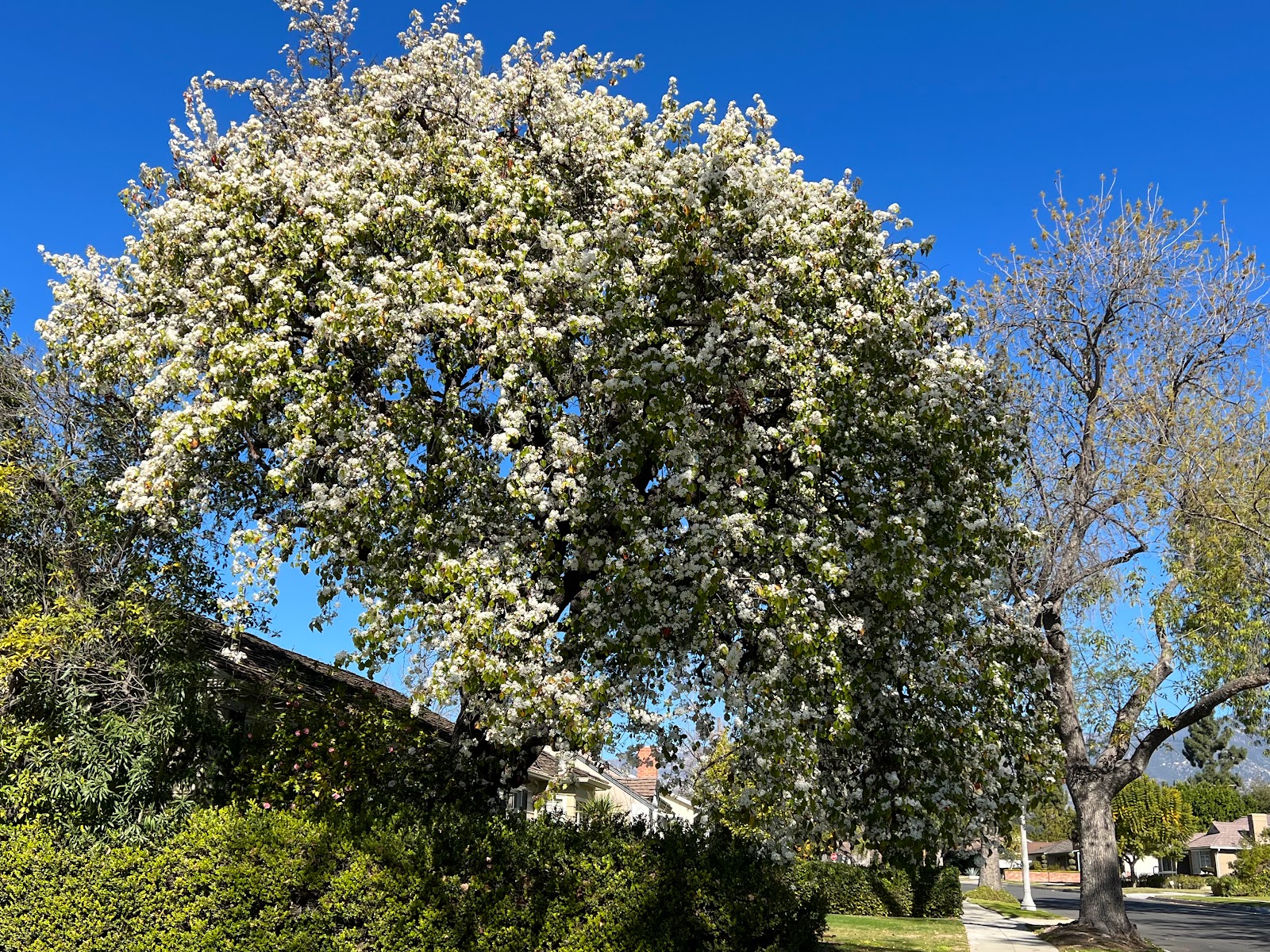
 For my final nature journal, I decided to go back to my roots and focus on the time I spent at home during Thanksgiving break. As I have discussed previously, my hometown of San Marino, California, is only 3.77 sq. miles and has only 12,000 inhabitants. Within this small area of land, we have no malls, grocery stores, or fast food chains. Our entire town consists of a park and residential areas with grassy front yards and historic trees. Whenever I go home, I look forward to spending time outside through power walks with my mother and leisurely walks with my dog. "Do you want to go on a walk with me?" my mom questions me everyday that I am home. And my response is always the same: "yes, of course". My brother and father are never interested, but I suppose this allows for a more intimate bonding experience. As we depart from our house and make our way down the street, I take in the unique Southern Californian environment around me. In front of each house lies vibran...

Final Video & Justification

Image
Kylie Spindler, Ashton Martini Justification             Throughout this course, a vast amount of material was covered regarding different perspectives of nature and personal experiences from different environmentalists. In addition, we each interacted with nature copious times through nature observations, where we implemented some common themes that we learned. It is a challenge to condense everything covered throughout the semester, so we decided to focus on a few common themes that stuck  out to us. The overarching theme included the dynamics between human interaction with nature. We as humans can either alter nature for better or for worse. This also leads into a theme of industrial tourism and how threatening it can be to the natural environment. Between our many interactions with nature, we have directly observed the circle of life through the active work of the biotic pyramid. These themes drove the structure of our...

Nature Journal #9: Wildlife in San Marino, CA

Image
 After my last blog post focusing on the fruit trees in my backyard, I realized that I missed one crucial part of my backyard and neighborhood: the wildlife. What is the environment without the fauna inhabiting it? Attending school in Texas has made me notice how different and unique the creatures were in my hometown of San Marino compared to here. The United States is so vast that the nature varies greatly between the different regions. Even my hometown alone differs from the surrounding suburbs, which I will highlight in this blog. I previously discussed the many squirrels that inhabit my town and destroy the avocados of our tree. Therefore, I would like to discuss more distinctive species. At night, we have rats that scurry along the roof of our house and are able to climb the trees in our backyard. I am quite convinced that they are mutant due to this apparent "superpower" they possess. I have never witnessed them during the day, but sometimes they become trapped in our t...

My Ten Best Photos

Image
 

Nature Journal #8: Backyard in San Marino, CA

Image
 During Thanksgiving break, I had the opportunity to return to my hometown of San Marino, California. I have lived in this small suburb of Los Angeles (only 12,000 people and 4 sq miles) for my whole life. Although I was eager to leave my small town for college, I will always miss my beautiful and unique California backyard. My parents told me that, when an arborist analyzed it, they noted eight unique fruit trees. Although I cannot recall them all, I decided to take a nature walk in my backyard during break to inspect the different trees I could find and notice how they have changed throughout the seasons and years. Unfortunately, many of the trees are not producing fruit in the winter. Before our house was built in the 1940s, the land was an orange orchard. I believe this is what made the grounds so suitable for a variety of different trees to thrive. As you walk towards the back of my yard, there lies our largest tree: an avocado tree. When in season, the straggly branches creat...

Nature Journal #7: Scottsdale, AZ

Image
 For Thanksgiving break this year, my family and I traveled to my grandparents' house in Scottsdale, Arizona. I have been to their house dozens of times over the years, but participating in this course has made me more aware of the environment there than I had been in the past. I have some not-so-fond memories of playing in my grandparents' backyard and getting poked by handfuls of cactus spikes. I whined, tears streaming down my face, as my grandfather ripped them out with tweezers one by one. My first impressions of Arizona were grim, to say the least. The Arizona weather this year certainly did not feel festive for the holiday season. The weather was in the 60s in the morning, but hit the high 70s and even low 80s in the afternoon. I brought some sweaters, but did not even end up wearing them.  The night before Thanksgiving, we all went out for dinner at our favorite restaurant in Arizona: Tonto in Cave Creek. We were sat outside, per out request, at a table near the golf c...

My Mary Oliver Poems: #6 Stones

Image
In this entry, Mary Oliver recounts her encounters with stones of all different hues, shapes, and sizes. She also ponders upon the history of the stones, noting how long they have been in their locations for and how they came to be. Many stones are quite resistant to change, traveling for thousands of year through different terrains and environments. For example, Oliver talks about how pink stones were part of a mountain before they were taken by a glacier, and how sedimental stones attain what floated down the outwash. Each stone has its own story, which I believe is similar to humans. Although stones appear simple at first, I believe focusing on their characteristics tells us a narrative of the history of our planet. No two stones are the exact same, just as no two stones have undergone the exact same conditions. I have made a connection between stones and humans. Each human has overcome adversity in different ways and has a different story to tell that has shaped them over time, jus...

My Mary Oliver Poems: #5 Night Flight

Image
 As I embarked on four total flights during Thanksgiving break (Dallas to Long Beach, Long Beach to Phoenix, Phoenix to Long Beach, and Long Beach to Dallas), I found "Night Flight" to be a fitting poem that resonated with my frequent flying experiences. In this passage, Mary Oliver focuses on the views observed while aboard a flight in the darkness. As we embark on flights, we often dissociate from our current reality and become hypnotized from views among the high altitudes. By the end of the flight, however, we must reconnect with our surroundings and return to Earth's embrace as we land. While we depart on a flight, "we see how much of earth still lies in wilderness, till terminals occur like miracles to civilize the paralyzing dark". Flights appear to be the only place that we can experience this perspective. Any other form of transportation - car, train, bike, foot - cannot expose you to such places of utter wilderness. These locations on Earth are free of...

My Mary Oliver Poems: #4 Just Lying on the Grass at Blackwater

Image
 This particular poem intrigued me due to the possible attraction to death that Mary Oliver describes. As humans, we often think of death as something dark, a process so foreign that we do not fully understand how it works until we undergo it ourselves. However, Oliver spins a different perspective on this inevitable human demise--she calls it the "glamour of death". Instead of seeing death as a painful affair, she opens our eyes to the connection we could possibly feel with nature. To be one with nature, "to be the green grass!--or maybe the pink rose, or the blue iris" would be a wonderful experience that only some people are fortunate enough to know.  This poem reminds me of Edward Abbey's statements regarding his opinions on death. He always explained how dying in the depths of nature is a privilege and something that he was quite jealous of. If he read this poem, I assume that he would agree with its positive ideas of becoming one with nature. Oliver goes o...

Nature Journal #6: Trinity River

Image
 Since my nursing friends and I have completed our lengthy clinicals for the semester that we usually have on Wednesdays and Fridays, we found ourselves with excessive free time this Wednesday. We are not used to having an entire day with nothing to do, especially as busy nursing students. One of my friends devised an amazing idea for us to spend our time--going for a walk along the Trinity River in Fort Worth and "geocaching". Geocaching is an outdoor recreational activity where you utilize the Geocaching app to search for containers, called geocaches, which are hidden outside in nature. The caches are often difficult to find, which provokes the geocacher to spend copious amounts of time outside searching for them. They come in all different sizes, and are hidden in places like under fake rocks, in a glass jar, or inside a telephone pole for instance. This app is a creative way to stay active, bond with friends, and explore the outdoors. As my friends and I ventured on our w...

My Mary Oliver Poems: #3 The Sun

Image
 In this poem, Mary Oliver explores the beautiful and comforting nature of the sun. Every morning, it rises from the other side of the Earth, brightening the world and everyone's day. At the day's end, the sun "floats toward the horizon", gradually dimming the world's light. She describes this process in a magical way, explaining how the sun rises up and down, almost as if it's levitating against Earth's gravitational pull. Without mistake, the sun rises and falls around the same time everyday. Even though someone's day may be hectic and unpredictable, there is always something they can rely on - the sun's illuminating presence. In a society full of twists and turns, this consistency provides a stable factor in everyone's life. This poem further explains in depth the many different backdrops the sun lights up behind. Each terrain offers a unique viewing experience. Along the water, the sun's reflection can be seen lighting up the waves, shi...

Nature Journal #5: Fort Worth Nature Center and Refuge (Week 2)

Image
 I was excited to contribute more work in the Fort Worth Nature Center and Refuge this week. I figured that it would be a similar day compared to last week, but this was proven to be untrue. The day began the same as last, with gathering our supplies and beginning to sort through the brush. I got caught in some strong, thorny vines that almost tripped me a few times. My thick skiing pants and boots kept me save from any possible dangers of the wilderness. I spent minutes grabbing long privets with lots of branches attached, contemplating whether I was able to bear more weight or not. It amazes me how many invasive plants an environment can develop over a short span of time. As the sun beat down on us, the wood chipper sputtered multiple times and eventually stopped working, resulting in us stopping in our tracks and waiting for a solution. Eventually, we resorted to cutting down privet and carrying it to the roadside. I personally thought I was more helpful with collecting privet, ...

My Mary Oliver Poems: #2 First Snow

Image
 This entry reminds me of my reaction experiencing waking up to snow for the first time in my life, which happened to be just last year at TCU. This poem documents the feelings and observations during the first snow of winter. Although this aspect alone would not make me relate as much, the mystical and awe-inspiring nature of the recount is something that I resonated with specifically. Oliver describes trees that glitter like castles and shinning hills as the snow forms and slowly melts away throughout the day. She explains how such a remarkable event brings up many questions about the meaning behind snow and how this has occurred. My favorite part of the poem comes at the end, when Oliver revisits this concept. She states that, "though the questions that have assailed us all day remain...walking out now into the silence and the light under the trees, and through the fields, feels like one". Although questions remain unanswered, the sheer appreciation for the beauty snow bri...

Nature Journal #4: Lake Worth

Image
 This weekend, I visited Lake Worth with a group of friends for one of their birthdays. I had never been to Lake Worth before, so I was excited for the new adventure ahead. I enjoyed the unconventionality of this birthday party. Instead of simply having a night out, we would be journeying out into nature. We began our night with a delicious dinner at Flower Child at University Park Village. After this, we made the half hour drive to the lake. The busy streets and freeways of student-infested Fort Worth dwindled down into single lane roads and dirt paths. It felt like an entirely different city due to the drastic difference between the center of the city and the outskirts. We parked our cars and began our journey down the hill to the lake shore. The walk down to the lake felt like it took ages. The terrain, consisting of uneven dirt, rocks, roots, bushes, and trees, made it difficult to maneuver. Large rocks and sudden drop-offs made us resort to holding each others hands on the way...

Nature Journal #3: Fort Worth Nature Center and Refuge

Image
 Last Tuesday, instead of meeting in the classroom, we ventured out into nature by convening in the Fort Worth Nature Center and Refuge. As I arrived at the main gated entrance for visitors, I was told how to drive to our meeting point and given a map. I eventually found a small, wooden building after unconfidently driving along the gravel path.  Dr. Wood led us inside where I found a glass cabinet with shelves teeming with items collected from the land. These included animal fur, turtle shells, bones, and even a mysterious object in a liquid-filled jar.  After our arrival, we were given some information about what we would be doing, the supplies we would use, and how to safely complete our volunteer work. When I heard we would be using a wood chipper, I was shocked and nervous to say the least. I am not very fond of sharp objects, but with some reassurance and guidance from Nick and Hayley, I was put at ease. We were then escorted to our work location, at least ten of us...

My Mary Oliver Poems: #1 Whelks

Image
 One of Mary Oliver's poems that particularly resonated with me focuses on the effect that time has on nature. In this specific poem, Oliver recounts her daily walks along the shore and the wildlife that she encounters. Along the coast are beautiful, spotless creatures with shells that haven't been withered down by the forces of the ocean. However, Oliver always draws her attention towards the whelks. These snails' shells have been broken and cracked over the years, resulting in them losing their pristine appearance. Nevertheless, Oliver seeks out the whelks and ponders upon the time they have spent on Earth, subject to the uncontrollable forces that exist.  My favorite line of this poem is, "I have been restless--I have felt there is something more wonderful than wholeness--than staying at home". Oliver metaphorically compares her life to the wildlife among the shore. In life, she can either stay at home and remain untouched, or spent her time outside enjoying wh...

Nature Journal #2: Benbrook Lake

Image
 Last Tuesday, our class ventured on a journey to canoe in Benbrook Lake. I was nervous for this trip, as I have never canoed before and do not believe I have upper arm strength to control a canoe. As we jumped out of our van loaded with canoes, I was mesmerized by the vastness of the lake. I became eager to canoe as Ciara and I buckled our life vests, but we struggled to carry it down the hill towards the edge of the lake. With some help from the recreation center staff, we pushed off into the lake.  Suddenly, I felt as though our survival was completely out of our hands. It was a scary feeling to think that Mother Nature would determine our outcome. She certainly did not take it easy on us, either. As I tried to steer from the back of the canoe, the wind overpowered us and pushed us the opposite direction. We were taught never to go parallel to the waves, but this was inevitably our fate. Ciara and I laughed out of self-entertainment and fear. When I veered my focus away fro...

Nature Journal #1: Inks Lake

Image
      In class last week, we discussed "Luther Standing Bear" from The Norton Book of Nature Writing  by Robert Finch and John Elder. In this reading, Standing Bear shares the experiences of the Lakota people and how their unique view on nature allows them to live a peaceful and content life. By living lives full of gratitude towards Earth, they are able to appreciate nature. This specific reading reminds me of my experience working at a camp on Inks Lake in Burnet, Texas.     Before working at this camp, I had only ventured to Fort Worth and Dallas in Texas. I was nervous for the three hour long drive in a state I was not yet familiar driving in. However, I was surprised by the ease of driving through remote areas without a city in sight. I found the drive to be peaceful, but very repetitive after a while. There was no variability in the type of environment I saw. It consistently of flat, grassless land with the occasional farm with some ca...